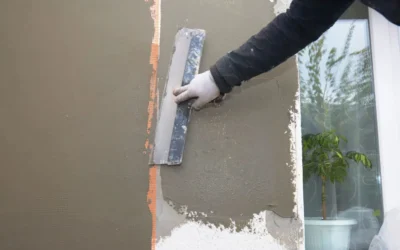
Stucco is one of those exterior finishes that can look beautiful for decades—and when it’s installed correctly and maintained, it can also be a long-term protective shell for your home. So how long does stucco last on a house?
In most real-world situations, homeowners can expect around 50+ years from a stucco exterior, and it’s not unusual to see stucco last 60–80 years (or longer) when installation, climate exposure, and upkeep all line up.
For homeowners in Pasadena, CA and nearby communities, the bigger question is usually less about a single number and more about: What affects stucco lifespan here, and what can I do to extend it? That’s what we’ll cover below—with practical guidance based on how stucco actually performs over time.
Modern Builders Cali (Stucco Contractor Pro) is a Pasadena-based team providing stucco services (installation, repair, restoration) and other exterior/interior work across Pasadena, Los Angeles, San Marino, and Sierra Madre.
Typical Stucco Lifespan: What Homeowners Should Expect
Most consumer and building-maintenance references land in a similar range:
- 50+ years is a common expectation for a stucco exterior when properly installed and cared for
- Some sources estimate 60–80 years (depending on wall assembly and upkeep)
- Building durability discussions often cite that properly applied stucco can have a very long service life, sometimes referenced at around a century in the right conditions
The honest takeaway: Stucco can last for decades, but the difference between “still great at 70 years” and “problematic at 20–30 years” almost always comes down to installation quality, water management details, and maintenance.
The 5 Biggest Factors That Determine How Long Stucco Lasts
1) Installation quality (this matters most)
Stucco is a system: prep, layering, curing, detailing, and finish all matter. When the surface isn’t properly prepared, or the application is rushed, you’re more likely to see premature cracking, poor bonding, and moisture issues.
Modern Builders Cali emphasizes a structured approach that includes on-site evaluation, surface preparation, professional application/repair, and a final walkthrough—a process that supports longevity because it avoids skipping the steps that cause early failure.
2) Moisture control (the silent lifespan killer)
Stucco itself can handle weather—but water intrusion behind the stucco is what shortens lifespan fast. Water can enter around penetrations, edges, transitions, and improperly sealed joints.
Modern Builders Cali specifically calls out repairing water damage and moisture infiltration as part of their stucco service scope, which is important because cosmetic patching without addressing moisture usually doesn’t hold up long-term.
3) Climate exposure (sun, temperature swings, and seasonal rain)
In the Pasadena area, your stucco may face:
- Strong sun/UV exposure for much of the year
- Temperature swings (day to night, season to season)
- Periodic rain that tests sealing and drainage details
These conditions tend to show up as hairline cracking, paint/finish wear, and water staining if maintenance falls behind.
4) The type of stucco system
Not all “stucco” is identical. Traditional cement-based stucco and synthetic systems (often referred to as EIFS) can have different performance profiles depending on installation and maintenance.
Some references put synthetic systems in a wide range—often 30–60 years depending on design and upkeep—while traditional stucco commonly lands in the longer ranges when properly installed.
5) Ongoing maintenance and timely repairs
Stucco isn’t “set it and forget it.” Even great stucco benefits from periodic attention:
- Re-sealing joints and transitions
- Touching up cracks before they widen
- Repainting/recoating when coatings age
Maintenance guidance commonly suggests repainting and re-caulking on a cycle (often around every 7–10 years, depending on exposure) to help stucco reach its higher lifespan potential.
Warning Signs Your Stucco May Not Reach Its Full Lifespan
If your stucco is aging faster than expected, it typically gives clues. Watch for:
- Cracks that keep reappearing in the same areas
- Staining that returns after cleaning (often moisture-related)
- Bubbling, softness, or crumbling (possible trapped moisture or delamination)
- Separation at edges near windows/doors or roof-to-wall transitions
- Multiple patch areas that never blend well or keep failing
Modern Builders Cali notes repair work such as crack repair, patching/rebonding, and texture matching—all of which are commonly needed to restore both performance and appearance as stucco ages.
How to Make Stucco Last Longer in Pasadena and Nearby Areas
If you want your stucco to be a “decades-long” exterior, focus on these practical moves:
- Get an evaluation when you notice early issues
Small cracks and minor damage are usually much easier (and more cost-effective) to address before they become water pathways. - Prioritize water entry points
Have a pro check transitions and penetrations—especially where stucco meets different materials. - Don’t ignore staining
Stains can be cosmetic, but repeated staining often indicates moisture patterns that should be diagnosed. - Match repairs correctly (materials + texture)
Poorly matched patches can fail sooner and may stand out visually. Modern Builders Cali highlights texture and color matching as a key part of achieving a consistent finish. - Follow a maintenance rhythm
Plan for periodic recoating and sealing so your stucco can reach the upper end of its lifespan range.
The Bottom Line
Stucco can last 50 years or more, and many homes see 60–80 years when it’s installed correctly and kept up with routine maintenance and timely repairs.
If you’re in Pasadena or nearby areas like San Marino, Sierra Madre, or Los Angeles, longevity comes down to doing the basics well: proper prep and application, smart moisture control, and staying ahead of minor cracks and sealing needs.
If you want, I can also write a second version of this post tailored to one specific service-area keyword (example: “Stucco in Pasadena” vs. “Stucco repair in Sierra Madre”) while keeping everything aligned with what the client states on their site.